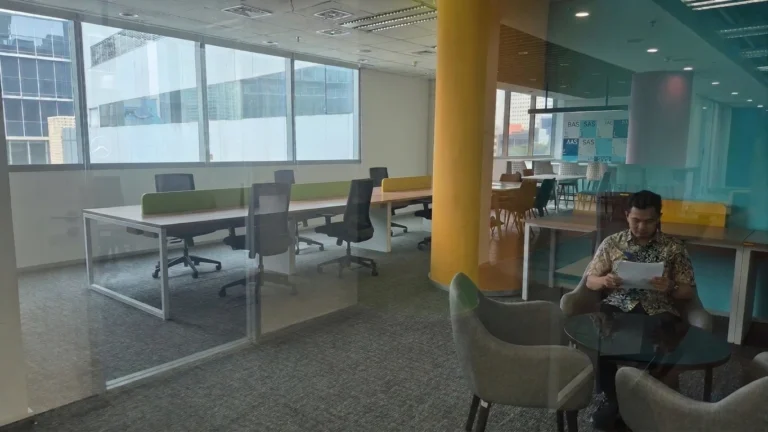


Working without having to come into the office every day once sounded like a luxury. Today, many professionals and companies treat it as an everyday option. Some work from home, from a café, from a coworking space, even from a different city to their head office.
This way of working is known as remote working. But what does remote working actually mean, how does it differ from WFH, and how do you stay productive while doing it? Here’s a closer look.
What Remote Working Means
Remote working is a working arrangement that allows employees to complete their work outside the office — from home, a coworking space, or any other location — supported by technology and an internet connection. Team communication and coordination happen online, through video conferencing, chat apps, and task management platforms.
In remote working, what’s assessed is the work produced, not physical presence at the office.
The Difference Between Remote Working, WFH, and Hybrid
These terms are often used interchangeably, but there are differences:
| Aspect | Remote Working | WFH (Work From Home) | Hybrid |
|---|---|---|---|
| Work location | Anywhere outside the office | From home specifically | A combination of the office and elsewhere |
| Nature | Can be permanent | Often temporary or situational | Scheduled |
| Office attendance | Rare or none at all | Depends on company policy | Regular, on set days |
Put simply, WFH is one form of remote working, while hybrid is a combination of remote work and working at the office. For a fuller explanation of hybrid, read our article on what hybrid working is.
Types of Remote Working
Fully Remote
All work is done outside the office. A company may not even have a physical office at all.
Remote With Periodic Meetings
Employees work remotely almost all of the time, but meet face to face occasionally — for monthly meetings, onboarding, or team events, for example.
Remote Across Cities or Countries
Employees live and work in a different city or country to the head office. This model demands good coordination across time zones.
Freelance Work
Freelancers generally work remotely for several clients at once, on a project basis.
The Advantages of Remote Working
For workers:
- No need to spend time and money travelling to the office.
- More freedom to arrange your schedule and your working environment.
- Easier to balance work with family or personal matters.
For companies:
- Office rental and operational costs can be reduced.
- The ability to recruit talent from anywhere, not just one city.
- Flexible working can become an added value in attracting and retaining employees.
The Challenges of Remote Working
Behind all that flexibility, remote working also comes with challenges:
- A sense of isolation. Limited face-to-face interaction can leave workers feeling lonely or disconnected from the team.
- Blurred lines between work and personal life. Without a clear end to the day, working hours can stretch without you noticing and lead to exhaustion.
- Distractions at home. Household matters, noise, or family members can get in the way of focus.
- Communication is more demanding. Written messages are prone to misinterpretation, and coordination can be slow if the team works at different hours.
- Dependence on technology. An unstable internet connection or a device problem can hold up your work immediately.
Jobs Suited to Remote Working
Not every job can be done remotely. Some fields that generally suit it include:
- Content writers, editors, and translators
- Graphic and UI/UX designers
- Programmers and software engineers
- Digital marketers and social media specialists
- Chat- or email-based customer support
- Accountants, consultants, and data analysts
Conversely, work that requires physical presence or specialist equipment — such as manufacturing, retail, or healthcare — is generally harder to carry out remotely.
Tips for Staying Productive While Working Remotely
- Set up a dedicated workspace. Separate your work area from your resting area so your brain can more easily enter “work mode”.
- Build a daily routine. Decide when you start and finish work, then stick to it the way you would at the office.
- Use the right collaboration tools. Google Meet or Zoom for meetings, for instance, Slack for communication, and Trello or Notion for task management.
- Communicate your progress regularly. A short update to your manager or team helps maintain transparency and trust.
- Take breaks regularly. Short pauses between tasks help maintain focus and prevent burnout.
- Make sure your internet connection is stable. Have a backup ready, such as tethering from your phone, just in case.
- Maintain social interaction. Occasionally working somewhere full of other professionals, or meeting your team in person, can ease that sense of isolation.
A Coworking Space: An “Occasional Office” for Remote Workers
Working from home every day isn’t always ideal. There are times when you need a more focused atmosphere, a presentable place to meet clients, or room to gather with your team.
SpaceHub Lab at Galeon Square (formerly Chubb Square), Thamrin, Central Jakarta, provides flexible workspace for exactly that:
- Hot desks for day-to-day work in a more conducive environment, with no long-term office lease commitment.
- Meeting rooms for client presentations, interviews, or team meetings.
- Event space for team gatherings, workshops, or community events.
- A strategic location close to Dukuh Atas MRT, the Tosari TransJakarta stop, and Sudirman commuter rail station.
For remote workers living in an apartment or a home that isn’t especially spacious, SpaceHub Storage in the same building can also be a solution for storing documents, work equipment, or rarely used items — keeping your home open and comfortable to work in.
Remote working gives you the freedom to work from anywhere, but it still calls for discipline, good communication, and a working environment that supports you. With the right preparation, you can enjoy the flexibility without sacrificing your productivity or your balance in life.
Need a more focused place to work, or a space to meet clients and your team? Try working from SpaceHub Lab in Thamrin.
Stay Connected With SpaceHub
Follow SpaceHub on social media for the latest updates, storage tips, and inspiration for creating a more open space.
Instagram | TikTok | LinkedIn | Website
SpaceHub — Your Space, Your Way.