

You wake up already feeling tired. Heading to the office feels like a chore. Work you once enjoyed now feels flat, even irritating. If this has been going on for weeks, you may be experiencing burnout.
Burnout isn’t a sign that you’re weak or lazy. It’s a signal that your workload and work pressure have gone unaddressed for too long. The good news is that burnout can be recognized and dealt with. Let’s start by understanding what burnout actually is.
What Is Burnout?
Burnout is a state of exhaustion that arises from chronic workplace stress that hasn’t been successfully managed. The World Health Organization (WHO) includes burnout in its ICD-11 classification as an occupational phenomenon, not as a disease or medical condition.
According to the WHO, burnout is characterized by three things:
- Feelings of energy depletion or exhaustion.
- Increased mental distance from your job, or feelings of cynicism and negativity about it.
- Reduced effectiveness at work.
The WHO also emphasizes that the term burnout is specific to the occupational context, and shouldn’t be applied to exhaustion in other areas of life.
Burnout and Stress: What’s the Difference?
Stress and burnout are often treated as the same thing, but they’re different:
| Stress | Burnout |
|---|---|
| Feeling that there are too many demands | Feeling empty, with nothing left to give |
| Emotions tend to overflow and be reactive | Emotions tend to be flat and blunted |
| You still have the drive to solve problems | You lose motivation and hope |
| Usually eases once the pressure lets up | Can persist long after the load has lightened |
Stress that’s left to continue without being managed can end in burnout.
Signs of Burnout Worth Watching For
Everyone experiences burnout differently, but some of the common signs that can show up include:
- Feeling physically and mentally exhausted almost every day, even after enough sleep.
- Losing interest in work you once enjoyed.
- Becoming more easily annoyed, cynical, or impatient with colleagues and clients.
- Finding it hard to concentrate, and often putting work off.
- Feeling that whatever you do is meaningless.
- Physical complaints such as headaches, disrupted sleep, or changes in eating patterns.
- Withdrawing from friends, family, or social activities.
Common Causes of Burnout
Burnout is rarely caused by one thing alone. Usually, several of the following factors build up together:
- Blurred boundaries between work and personal life, which often happens when working from home.
- An excessive workload over a long period without enough of a break.
- A lack of control over how and when you work.
- A lack of appreciation for the effort you’ve put in.
- An unhealthy work culture — one full of conflict, office politics, or an expectation to always be online.
- Unclear expectations around your role and work targets.
How to Deal With Work Burnout
Recovering from burnout takes time, and it isn’t always linear. Here are steps you can start with:
Acknowledge that you’re not okay
The first step is often the hardest: stopping pushing yourself and admitting that you need a break. Recognizing where you are helps you take the right steps.
Take time off that’s genuinely time off
Use your leave, and try to be truly away from work while you’re on it. Turn off email and work group notifications if you can.
Set clear boundaries between work and personal life
Decide when your workday ends and stick to it. Avoid opening your laptop in bed. For anyone who often works from home, separating your workspace from your resting space can really help your brain “switch modes”.
Talk to your manager or HR
Share your situation honestly and focus on solutions — adjusting your workload, redistributing tasks, or more flexibility in your schedule. Many managers don’t realize how much their team is carrying until someone says so.
Reorganize your priorities
Not all work is equally urgent. Sort out what’s important, what can be delegated, and what can wait. Learning to say “no” to extra tasks is part of looking after yourself too.
Take care of your body’s basic needs
Enough sleep, regular meals, and staying active sound like clichés, but all three are the foundation of getting your energy back. Start small, with a short walk after lunch, for example.
Change your working environment now and then
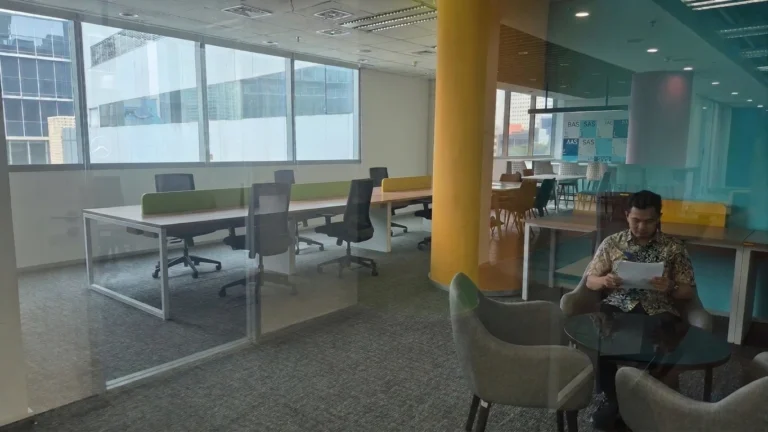
Working in the same place every day can make things feel monotonous. Occasionally working from a different location, such as a coworking space, can help refresh your mind and give you the chance to meet new people.
Stay close to the people around you
Talking to a friend, a family member, or a colleague you trust can lighten the load. You don’t have to face all of it alone.
Make time for what you enjoy
Returning to a hobby or an activity outside work helps remind you that your identity isn’t defined by your job alone.
Seek professional help
If the steps above aren’t enough, consult a psychologist or psychiatrist. Seeking professional help isn’t a sign of failure; it’s a form of caring for yourself.
A Change of Scene for a More Balanced Working Life
If you work mostly from home, the boundary between your “workspace” and your “resting space” can disappear easily. The result is that your mind struggles to truly step away from work.
SpaceHub Lab in Thamrin, Central Jakarta, can be an alternative place to work with a different atmosphere. You can use a hot desk for day-to-day work, a meeting room for team discussions, or event space for sharing sessions and team building. It’s close to Dukuh Atas MRT and the Tosari TransJakarta stop, so it’s easy to reach without having to battle the traffic.
By separating where you work from where you live, you can rest in the real sense of the word, and give yourself room to enjoy life.
Burnout is a signal that something needs to change — whether that’s your workload, the way you work, or your working environment. Recognizing the signs early and taking small steps consistently can help you recover and start enjoying your work again.
Remember, looking after yourself doesn’t make you unprofessional. On the contrary, when you’re in good shape, you can work better.
Stay Connected With SpaceHub
Follow SpaceHub on social media for the latest updates, storage tips, and inspiration for creating a more open space.
Instagram | TikTok | LinkedIn | Website
SpaceHub — Your Space, Your Way.