

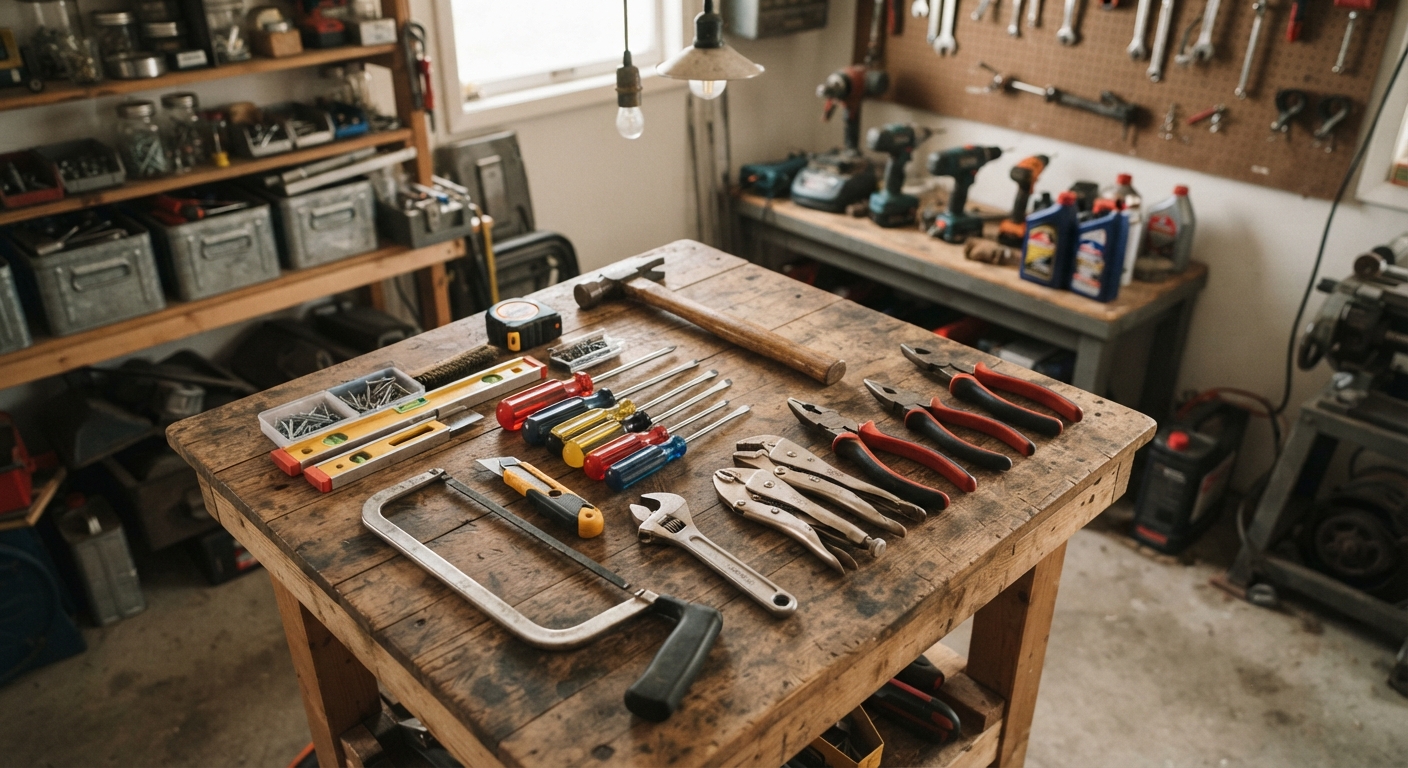
A screwdriver that’s vanished somewhere, a rusted wrench, a power drill that won’t switch on even though you only used it a few months ago. If any of that sounds familiar, the problem is most likely in how they’re stored.
Tools are certainly built to be tough, but that doesn’t mean they can be stored just anywhere. Humid air, dust, and piles of other things can shorten their life. Here are some tips for storing tools so they stay in good shape, remain easy to find, and are always ready to use.
Why Does the Way You Store Tools Matter?
- Preventing rust and damage. Metal that’s continually exposed to damp rusts easily, while the electronic components in power tools can be damaged by dust and humidity.
- Saving time. Neatly arranged tools are quicker to find when you need them.
- Greater safety. Sharp objects left lying around can cause injury, especially if there are children at home.
- Saving money. Well-maintained tools don’t need replacing as often.
Tips for Storing Your Tools
Clean Them Before Storing
Don’t put tools away immediately after using them. Clean off any remaining dust, sawdust, oil, or cement with a cloth or brush. Dirt left stuck to a tool can absorb moisture and trigger rust.
Make Sure They’re Completely Dry
Moisture is the main enemy of metal tools. Once cleaned, dry your tools with a dry cloth and leave them in the open air for a while before storing them. This matters especially if they’ve been caught in the rain or washed.
Apply an Anti-Rust Lubricant
For metal tools you rarely use, apply a thin layer of lubricant or anti-rust oil to the surface. This coating helps protect the metal from humid air while it’s in storage.
Store Them Somewhere Dry and Cool
Avoid storing tools on the floor, near a bathroom, or in a damp, stuffy storeroom. Choose a place with good air circulation. For closed containers such as a toolbox, add silica gel to absorb moisture, and replace it periodically.
Group Them by Type and Function
Separate hand tools (screwdrivers, pliers, hammers, wrenches), power tools (drills, grinders, electric saws), measuring tools, and small accessories (drill bits, bolts, screws). Grouping them like this makes it easier to find what you need and to check whether anything has gone missing.
Use the Right Containers and Racks
- A toolbox for hand tools you often take with you.
- A pegboard on the wall for tools you use frequently, so they’re visible and easy to grab.
- A drawer organizer for bolts, screws, and drill bits.
- A metal or sturdy rack for power tools and their cases.
Store Power Tools in Their Original Cases
The cases that come with power tools are usually designed to protect them from knocks and dust. Keep the tool along with its charger and accessories in the same case so nothing gets scattered.
Look After Power Tool Batteries Properly
For battery-powered tools, remove the battery from the tool when storing it for a long period. Keep the battery somewhere dry and out of direct heat, and follow the manufacturer’s guidance on the recommended charge level for long-term storage.
Label Everything and Keep an Inventory
Put a label on every container or rack. If your tool collection is fairly large, keep a simple inventory list on your phone. This makes checking much easier, particularly if the tools are stored away from home.
Keep Chemicals and Flammable Liquids Separate
Paint, thinner, oil, petrol, and cleaning fluids are better off not stored together with your tools. Beyond the risk of leaking and damaging your equipment, these materials are also dangerous when kept in an enclosed space. Store them separately somewhere well ventilated and away from sources of heat.
When Your Tools No Longer Fit at Home
Once a renovation is finished, or as your tool collection keeps growing, the storage space at home often isn’t enough any more. The storeroom fills up, the garage gets cramped, and tools start ending up scattered in corners.
This is where self storage can be the solution. A private storage unit gives you a dedicated space for your tools, without having to sacrifice room at home. Self storage also suits:
- Homeowners who only use tools occasionally, during a renovation or seasonal repairs, for example.
- Tradespeople, contractors, and technicians who need somewhere to keep equipment between projects.
- Small business owners, such as a workshop or repair service, who need extra storage without a long-term lease.
- Apartment residents who don’t have a storeroom or garage of their own.
Storing Your Tools at SpaceHub
SpaceHub provides self storage units well suited to keeping tools in good condition:
- Air-conditioned rooms that help keep humidity stable, so metal tools don’t rust easily.
- 24-hour CCTV and private access by PIN or card, so your valuable equipment stays secure.
- Private units that only you can access.
- A cargo lift to make moving heavy tools easier.
- Flexible monthly rental, a good fit for temporary needs such as during a renovation.
For a collection of hand tools and a few power tools, a Tiny unit is usually enough. For a full set of tools along with racks, machinery, or trade equipment, a Mini or Midi unit may be the better option. The full range of sizes and prices is available on the SpaceHub Pricelist page, or use the storage size calculator.
Please note: for safety reasons, fuel, gas cylinders, and flammable liquids cannot be stored in a storage unit. Make sure any fuel-powered machinery has had its tank emptied before being stored.
Storing your tools properly isn’t only about tidiness; it’s about protecting your investment. By cleaning, drying, and arranging your tools in the right place, they’ll last longer and always be ready when you need them.
No more room at home for your tools? Store them safely at SpaceHub — air-conditioned units with 24-hour CCTV and private access in Thamrin, Bendungan Hilir, and Daan Mogot.