

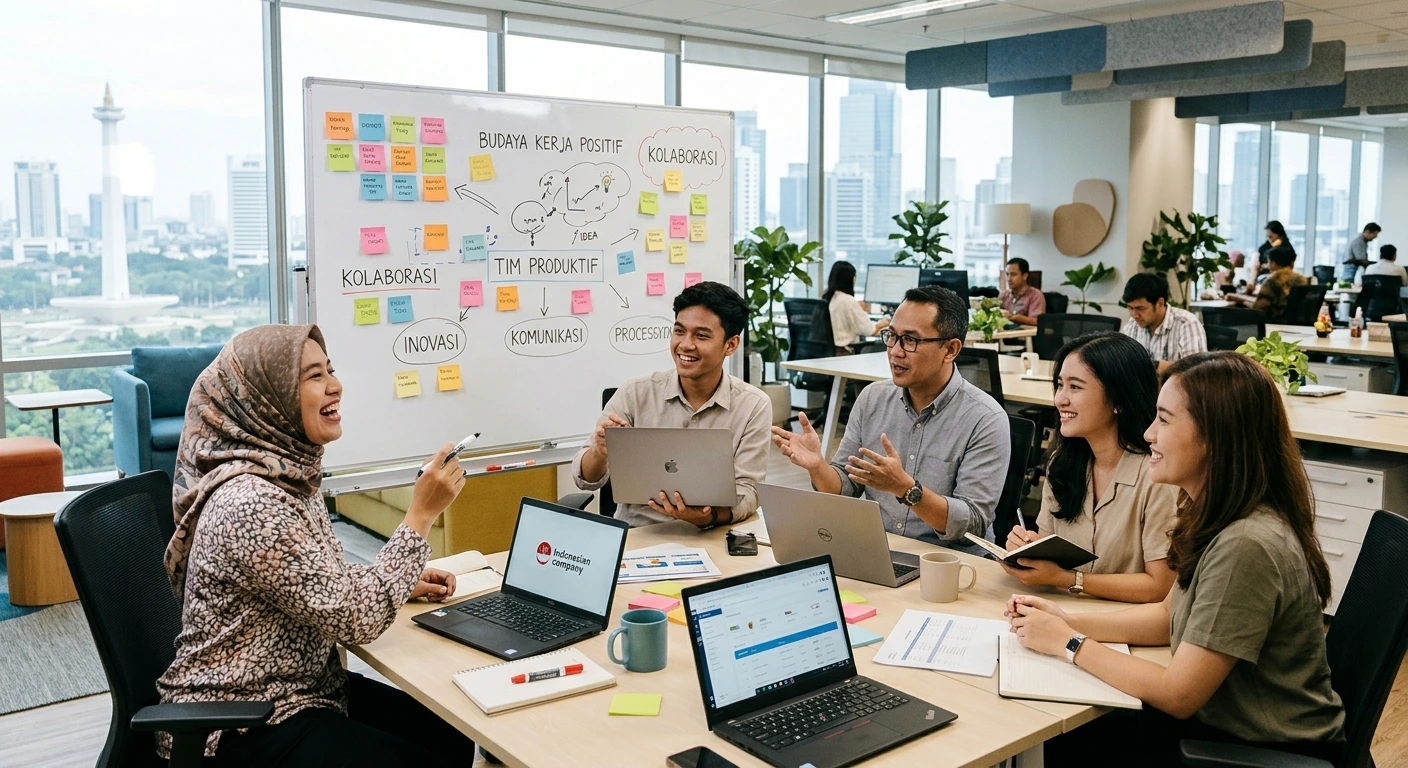
Work culture refers to the collective values, attitudes, habits, and behaviors that develop within an organization or company and are shared by all of its members. As a reflection of how a working environment thinks, work culture becomes the foundation for shaping employees’ work ethic, motivation, and productivity.
Take a company that upholds a culture of discipline, for example: its employees get used to arriving on time, completing work by the deadline, and respecting other people’s time.
The Components of Work Culture in an Organization
Work culture is the primary foundation for shaping the behavior and attitudes of individuals within an organization. It doesn’t only govern how employees work; it also influences the working climate, right through to how decisions get made between individuals and teams.
This is made up of several key components that work together to form each company’s unique character.
Values
Values are the basic principles that guide how every member of an organization behaves. Values such as integrity, responsibility, collaboration, innovation, and service become the ethical guidance that everyone in the company needs to apply.
In a property company, for instance, valuing innovation in facilities and accessibility sits at the center of a work culture that encourages everyone to think creatively and not be afraid of finding new breakthroughs in today’s competitive property business.
Values clearly have to be embedded in a company’s vision and mission, and then communicated consistently through training, internal communication, managerial decisions, and external communication. Companies that successfully ground their values find it easier to maintain consistent behavior and work ethic across the whole team.
Norms
Work norms are the unwritten rules that shape expectations of how members of an organization behave. Norms aren’t written rules, but their presence can determine whether or not someone fits the working environment.
Examples include respecting colleagues’ working hours, not spreading gossip around the office, and respecting colleagues’ privacy.
Symbols
Symbols play an important role in reinforcing organizational culture. A symbol can be a uniform, a logo, the company’s signature colors, or an office interior that reflects the organization’s values and spirit. Rituals, meanwhile, cover activities such as morning assemblies, monthly awards, employee birthday celebrations, and other regular events.
Communication Style
Every organization has its own distinctive communication style, ranging from formal and hierarchical through to relaxed and open. This style affects how information is delivered and received, and determines how quickly an organization can respond to challenges and opportunities.
Leadership and Setting an Example
A leader’s role in shaping and maintaining work culture is vital. Leaders who are able to set an example reinforce the organization’s values and norms in a tangible way. A leader who upholds discipline and work ethics, for instance, will influence their team to do the same.
Types of Work Culture
Work culture is the set of values, norms, and habits that guide employee behavior within an organization. Based on the Organizational Culture Assessment Instrument (OCAI) framework, work culture is generally divided into four main categories: Clan, Adhocracy, Market, and Hierarchy.
Clan Culture
Characterized by an orientation toward teamwork, strong interpersonal relationships, open communication, and a warm, family-like working atmosphere. The focus is on employee development and a strong sense of belonging.
Adhocracy Culture
Characterized by a high regard for creativity, innovation, experimentation, and the courage to take risks. The focus is on rapid growth, agility, and adapting to market changes.
Market Culture
Highly competitive and aggressive in character, oriented toward targets, deadlines, and tangible results. The focus is on winning the business competition and achieving high profitability.
Hierarchy Culture
Characterized by structure, formality, strict rules, and a clear chain of command and managerial control. The focus is on stability, operational efficiency, and predictability at work.
Examples of a Positive Work Culture
Here are some examples of a positive work culture you might encounter, or start applying, at your office:
- Two-way feedback. It isn’t only managers who give input; the team is also free to share their views with managers.
- Respect for personal time. There’s no expectation to reply to work messages outside working hours, unless it’s a genuine emergency.
- Effective meetings. There’s a clear agenda, the right participants, and the outcomes are recorded.
- Flexible working. The team can work from the office, from home, or from a coworking space, as long as targets are met.
- Regular appreciation. Even small achievements are acknowledged, without waiting for the annual review.
- Room to learn. There are opportunities to join training, sharing sessions, or try a new role.
Signs of an Unhealthy Work Culture
On the other hand, watch out for these signs of a toxic work culture:
- Mistakes always lead to a search for someone to blame, rather than a solution.
- Gossip and office politics dominate over open communication.
- Overtime is treated as a measure of loyalty.
- Ideas from junior employees are rarely heard.
- High employee turnover with no evaluation.
Your Workspace Shapes Your Work Culture Too
It’s often forgotten, but the physical environment also influences how people work. A space that’s too cramped and closed off can make communication stiff. An open, flexible space, on the other hand, makes it easier for a team to discuss and collaborate.
For teams working under a hybrid arrangement or not yet needing a permanent office, a coworking space can be the middle ground. SpaceHub Lab in Thamrin, Central Jakarta, provides hot desks and dedicated workspace for day-to-day work, meeting rooms for team or client discussions, and event space for townhalls, workshops, or team building. It’s close to Dukuh Atas MRT and the Tosari TransJakarta stop, making it easy to reach for teams from across Jakarta.
With a flexible workspace, teams can still meet face to face regularly and keep their work culture alive, without being tied into a long-term office lease.