

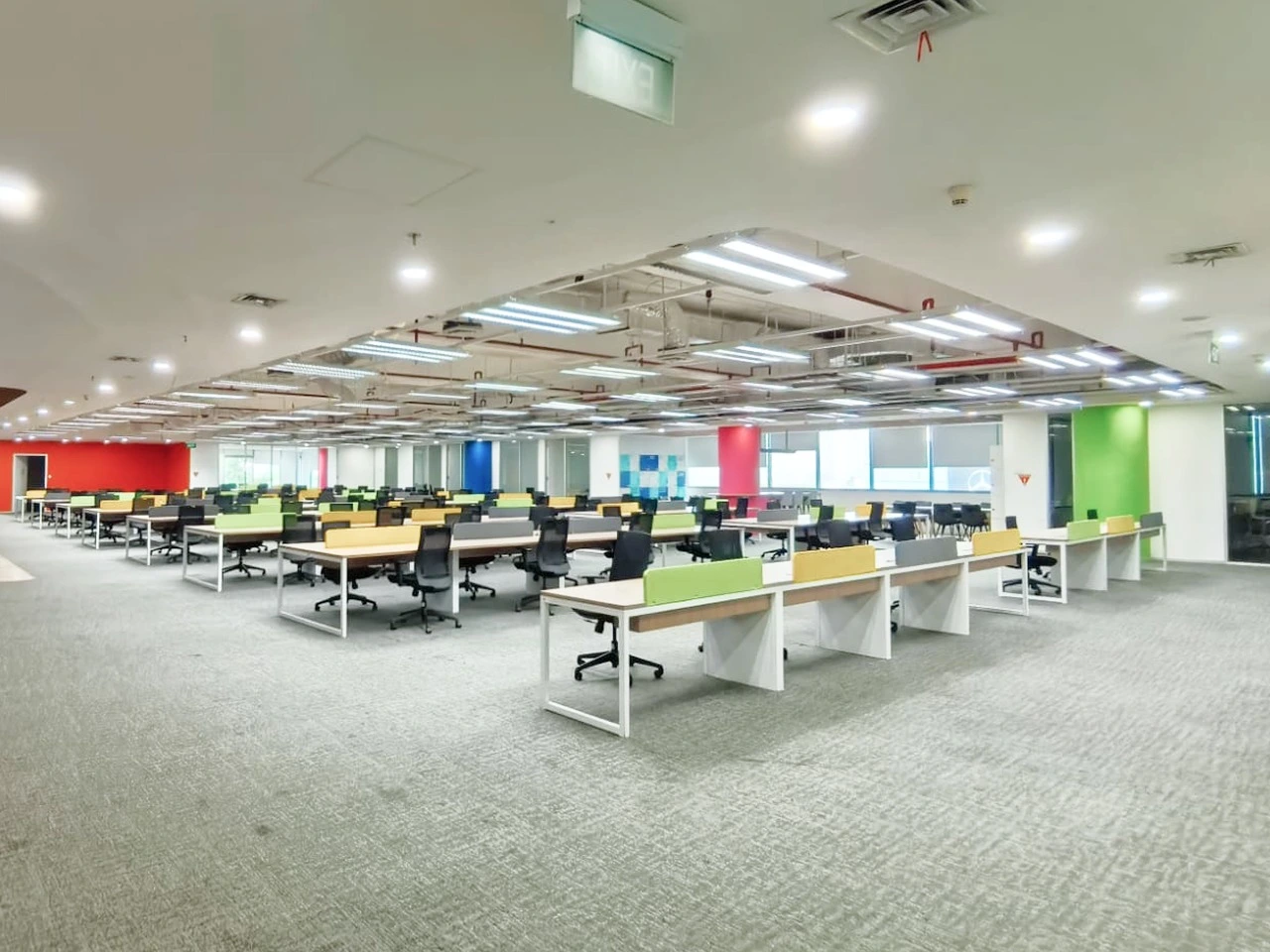
The way we work keeps changing. Fewer and fewer people are tied to a single desk in a single office for eight hours a day, and the rise of flexible and hybrid work has made alternative workspaces far more sought after — especially in big cities like Jakarta. This is exactly where coworking spaces have become an increasingly popular solution.
But what is a coworking space, really? How does it work, and is it the right fit for your needs? This article breaks the concept down from end to end — from the definition and types of spaces to facilities, benefits, and how to choose the right one. By the end, you’ll be able to tell for yourself whether a coworking space suits the way you work.
What Is a Coworking Space?
A coworking space is a shared workspace that individuals and teams from different backgrounds can rent on flexible terms. Members share facilities such as desks, wifi, meeting rooms, and lounge areas, without having to rent an office of their own.
Understanding the Concept
Put simply, a coworking space is a workplace designed to be used by people who don’t necessarily work for the same company. Freelancers, remote employees, startups, and small teams can all work in the same space, each on their own projects.
Unlike a café that happens to be used for work, a coworking space is purpose-built for productivity: proper desks and chairs, reliable internet, and an atmosphere that supports focus. The core idea is sharing space and facilities, which makes the cost far lighter than renting an entire office.
How Coworking Spaces Work
The coworking model runs on flexible rental terms. Instead of the long-term leases that come with conventional offices, you pay according to what you actually need — daily, monthly, or per session for certain rooms.
Typically, you choose the type of space that fits your needs (a free-seating desk or a private room, for example), then get access to the shared facilities for the duration of your booking. You simply show up and work, without having to arrange things like internet, electricity, or building maintenance yourself — it’s all included in the rental fee.
Types of Spaces in a Coworking Space
Coworking spaces usually offer several types of spaces for different needs. Understanding the differences helps you pick the one that fits best.
Hot Desk
A hot desk is a free-seating system — you can sit at any available desk, with no fixed spot. It’s the most flexible option and usually the most affordable, making it a good fit for freelancers or anyone who doesn’t come in every day and doesn’t need a permanent desk.
Dedicated Desk
A dedicated desk is a fixed desk that’s “yours” for the duration of your rental. You can leave your things there and return to the same spot every time. It suits people who work from one place regularly and want consistency in their workspace.
Private Office
A private office is an enclosed workspace for individuals or small teams who need more privacy and quiet. Even though it’s a closed room, occupants still get access to the coworking space’s shared facilities. It’s the choice for teams who want their own space without the hassle of renting and managing a conventional office.
Meeting Room & Event Space
Beyond day-to-day workspaces, many coworking spaces provide meeting rooms for discussions or presentations, as well as event spaces for larger occasions such as workshops, seminars, or community gatherings. These rooms are usually rented per session, as needed.
Common Facilities in a Coworking Space
Facilities are one of the main selling points of a coworking space, because you get them without having to provide them yourself. The most common ones include:
Fast wifi — the foundation of it all, since nearly all modern work depends on reliable internet.
Meeting rooms — for team discussions or client meetings in a more professional setting.
Pantry — an area to make coffee or tea and take a short break.
Lounge area — space to rest or have a casual discussion away from your desk.
Other supporting facilities — such as printers, lockers, parking, or a prayer room, depending on the provider.
Together, these facilities let you get straight to work without worrying about operational details.
Coworking Space vs. Conventional Office
A lot of people ask what actually sets a coworking space apart from renting a regular office. The differences are fairly fundamental.
Flexibility & Cost
Conventional offices are generally leased long term (by the year) and used exclusively by one company, with a large upfront cost — and that’s before furniture, internet, and maintenance. A coworking space is far more flexible: you can rent it daily or monthly, at a price that already includes facilities. That makes coworking a friendlier option when your needs aren’t yet certain or when you’re operating at a smaller scale.
Facilities & Community
In a conventional office, every facility has to be provided and managed by you. In a coworking space, facilities are already there and shared among members. On top of that, coworking spaces offer something you rarely find in your own office: community. You work alongside professionals from all kinds of fields, which opens the door to new connections, collaborations, and even new clients.
The Benefits of Using a Coworking Space
So why are so many people making the switch? Here are the main benefits.
Better Productivity & Focus
Working from home often comes with constant distractions, while a café isn’t always comfortable for long stretches. A coworking space gives you an environment that was actually designed for work, with an atmosphere that helps you stay focused and settle into “work mode.”
More Affordable and Flexible Than Renting an Office
For individuals and small teams, renting an office of your own often isn’t worth the cost. A coworking space gives you access to professional space and facilities at a much lighter price, and you only pay for what you need. When your needs change, your package can be adjusted without locking you into a long contract.
Networking & Collaboration Opportunities
One of the things that makes coworking spaces distinctive is the community. Sharing a space with freelancers, startups, and other professionals opens up opportunities to exchange ideas, collaborate, or find new business — something that’s hard to come by when you’re working alone at home.
Who Are Coworking Spaces For?
Coworking spaces suit a wide range of users, especially those who need a professional workspace with flexibility:
Freelancers — who need a place to focus outside the house without a major rental commitment.
Startups — who need space that can scale as the team grows, without investing in an office upfront.
Remote & hybrid teams — who need an occasional meeting point for discussions or working together.
Hybrid workers — who need an alternative place to work on days they’re not at the main office.
Small businesses — who need a professional address and workspace at a manageable cost.
If you recognize yourself in any of these categories, a coworking space is very likely relevant to your needs.
How to Choose the Right Coworking Space
Once you understand the concept, the next step is choosing the right one. A few things worth considering:
Location — pick one that’s easy to reach from home or close to your clients, so you don’t spend your day commuting.
Facilities — make sure the facilities you actually need (fast wifi or meeting rooms, for instance) are available.
Budget — match it to what you can spend, and compare what you get from each package.
Package type — check whether there’s an option that fits your working pattern, whether daily, monthly, or a private room.
Atmosphere & community — take the time to tour the place in person and see whether the vibe fits the way you work.
Weighing these factors helps you find a coworking space that genuinely supports your productivity, rather than just giving you somewhere to sit.
If you’re based in Jakarta and starting to consider giving it a try, a coworking space in Jakarta like SpaceHub can be a good starting point to see the available spaces and packages for yourself.
Ready to Try a Coworking Space?
Coworking spaces offer a way of working that’s flexible, affordable, and built to support productivity — a good match for a modern working style that’s no longer tied to one fixed office. Once you understand the types of spaces, the facilities, and how to choose between them, you can decide whether this is the right solution for you.
Now that you know what a coworking space is, ready to give it a try? SpaceHub offers flexible coworking spaces in Jakarta — from hot desks to private offices and meeting rooms. Check out the options and pricing here.