
Work productivity indicators are quantitative or qualitative measures used to assess how effectively and efficiently an individual or team completes their tasks. In today’s increasingly dynamic work environment, productivity can no longer be measured solely by hours worked—it’s about working smarter.
To ensure your team is truly moving in the right direction, clear and objective measurement tools are essential. That’s where productivity indicators come in. This article explores what productivity indicators are, the different types, and how you can apply them to boost team efficiency.
5 Most Common Output-Based Work Productivity Indicators

Below are commonly used indicators by companies and management teams to assess work productivity:
Output per Working Hour
This indicator measures the amount of output produced within a specific time period. It is particularly useful for production, content creation, or customer service tasks.
Example: An e-commerce admin who responds to 100 customer chats in 5 working hours has a productivity rate of 20 responses/hour.
Work Quality
Fast output with many revisions? That usually indicates low productivity. This indicator evaluates accuracy and error rates. High-quality work meets established standards and minimizes customer complaints.
Time Efficiency
How much time is spent on core tasks versus wasted? This is one of the most commonly used indicators, especially in deadline-driven roles. The less time needed to complete a task, the more efficient and optimized the process.
Employee Engagement
Engaged employees tend to be more productive. This can be measured through internal surveys, retention rates, or the number of initiatives proposed. Employees who take initiative are often seen as independent workers who need minimal supervision.
Resource Utilization
This measures how effectively assets such as workspace, tools, and storage are used. Investments in resources provided by the company are meant to accelerate workflows, reduce human error, and increase result accuracy.
In this context, comparing automation vs. manual labor becomes a key benchmark of technological effectiveness. When automation runs optimally, it not only speeds up workflow but also allows human workers to focus on strategic tasks that require creativity and decision-making.
Work Productivity Indicators Application in a Work Team

Here is an example of how productivity indicators are applied in a marketing team:
- Number of campaigns completed in one month (output):
The content team sets a target number of deliverables aligned with specific objectives. Success is then measured based on KPIs set for that period. - Campaign success rate (quality):
The marketing team evaluates campaign performance using metrics like impressions, reach, shares, and follower growth. If goals are met, the content is deemed high-quality. Otherwise, a review may be needed to develop more effective campaigns. - Time taken from concept to launch (efficiency):
The team sets a deadline for each campaign, broken down by the timeline of every piece of content produced. - Idea contribution from the creative team (engagement):
While tasks are typically divided among team members, social media campaign ideas don’t always have to come from the social media team. Other departments are encouraged to contribute ideas as part of broader team engagement. - Frequency of tool and storage usage (resource utilization):
This includes how often marketing teams use available tools and resources to achieve their goals.
From these insights, managers can determine whether adjustments are needed—be it workload distribution, additional training, or workspace reconfiguration.
Environmental Factors Affecting Productivity
A cluttered workspace can increase stress and lower productivity. Numerous studies have shown that a clean and organized space boosts focus and efficiency.
Key tips to consider:
- Avoid piling up unused items in work areas.
- Store documents, stock, or seasonal tools in a separate storage unit.
- Keep workspaces open and comfortable to reduce tension and improve performance.
A Practical Solution to Support Productivity
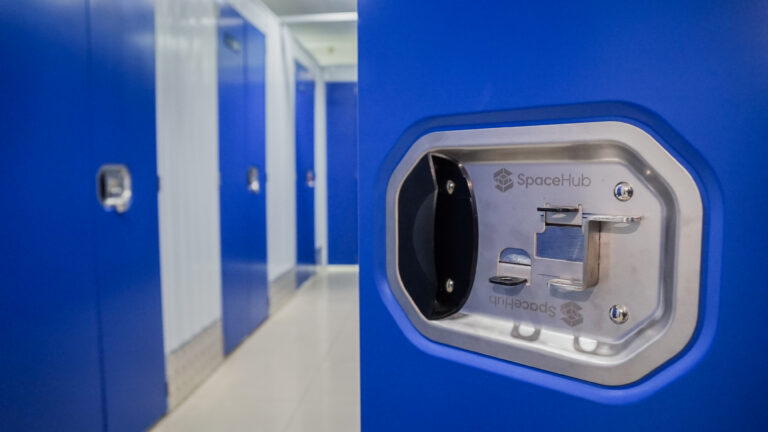
This is where SpaceHub steps in as part of the productivity solution. By storing inactive items in a self-storage unit, you can:
- Create a more spacious and breathable workspace
- Reduce visual distractions
- Organize documents and inventory systematically without cluttering your main work area
SpaceHub provides self storage facilities at strategic locations in Jakarta, including MH. Thamrin, Gajah Mada, Bendungan Hilir, and Daan Mogot—ready to support your business or personal needs.
Visit our page for more information:
Website: www.spacehub.id
Instagram | TikTok: @spacehub.storage
Facebook: SpaceHub Storage Indonesia