

In modern logistics, speed and accuracy are two key factors that determine warehouse operational success. One critical element that is often overlooked but has a major impact on efficiency is the loading dock.
For businesses handling large volumes of shipments, the presence of a loading dock in warehouse operations is not just an additional feature it’s a necessity.
What Is a Loading Dock in Warehouse Management?
A loading dock is a designated area in a warehouse used for loading and unloading goods from delivery vehicles such as trucks and pick-ups. It functions as the main gateway connecting the outside (transportation) with the inside of the warehouse (storage).
Without a proper loading dock, the transfer process becomes slower, increases the risk of damage, and can create safety hazards for workers.
Common Types of Loading Docks
Every warehouse has different needs, which is why loading docks come in various designs. Here are the most commonly used types:
Flush Dock
The most common type, where the warehouse wall aligns with the truck body, allowing goods to be transferred seamlessly.
Enclosed Dock
Located inside an enclosed area to protect goods from rain or extreme weather. Ideal for sensitive items like food, pharmaceuticals, and electronics.
Depressed Dock
The dock sits lower than the warehouse floor, making it easier to load/unload items using trolleys or forklifts.
Sawtooth Dock
Designed in a diagonal “sawtooth” layout to maximize truck positioning in limited spaces.
The Role of Loading Docks in Warehouse Efficiency
A well-designed loading dock not only speeds up loading and unloading but also offers strategic advantages:
- Time efficiency — trucks can dock directly, reducing transfer time
- Improved goods safety — reduces the risk of items falling or being damaged
- Worker safety — smoother workflow prevents congestion in the warehouse
- Space optimization — good design ensures storage space is used effectively
In other words, loading docks play a crucial role in maintaining a stable supply chain and reducing long-term operational costs.
Designing a Safe and Efficient Loading Dock
Modern warehouses follow certain standards to ensure dock areas remain efficient and safe. Important considerations include:
- Vehicle access: Trucks must be able to enter and exit easily
- Security systems: 24/7 CCTV, personal access PINs, and security personnel — similar to what SpaceHub provides
- Support equipment: Cargo lifts, pallet jacks, and forklifts to speed up unloading
- Spacious parking areas: Prevents disruption to warehouse traffic flow
- Clean and well-lit environment: Reduces accidents and keeps goods hygienic
Example of Modern Loading Dock Facilities, SpaceHub
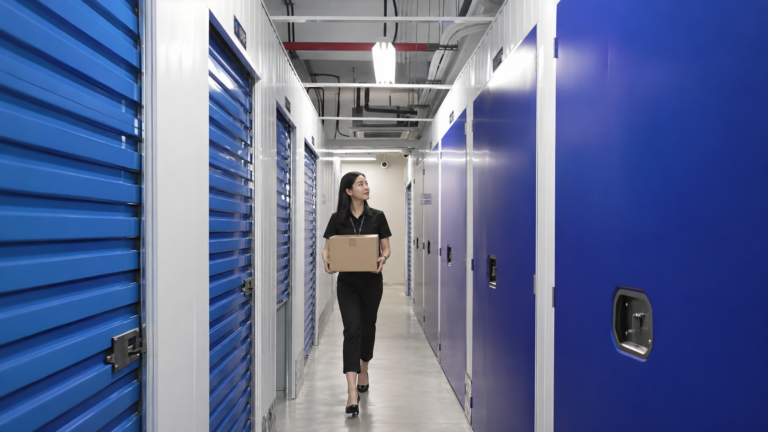
Several SpaceHub branches such as Thamrin, Gajah Mada, and Daan Mogot are equipped with cargo lifts and spacious parking areas, allowing business customers to load and unload more efficiently and safely.
All SpaceHub locations also offer top-tier features, including:
- 24-hour access
- Double security with personal PIN and CCTV
- Flood-free zones
- Clean, air-conditioned storage rooms
- Regular pest control
These features make SpaceHub an ideal solution for businesses needing modern, secure warehouse space in central Jakarta.
Tips for Managing a Loading Dock for Smooth Operations
- Schedule unloading/loading times to avoid vehicle buildup
- Implement a clear SOP so every staff member understands the workflow
- Use digital warehouse management systems to track goods in real time
- Keep the area clean and well-lit to avoid operational disruptions and accidents
Loading docks play a vital role in ensuring warehouse operations run quickly, safely, and efficiently.
For businesses that don’t have their own loading dock facilities, using modern storage services like SpaceHub can be a smart solution to improve distribution flow.
Need easy-access, secure loading & storage space?
Visit SpaceHub in Thamrin, Bendungan Hilir, Gajah Mada, or Daan Mogot and experience seamless modern storage management for your business.